
Photographic Visions – Spring 2026
A curated international photography exhibition
March 7–31, 2026, Barcelona
 |  |
|---|---|
 |  |
 |  |
 |  |
 |  |
 |  |
 |  |
 |  |
 |  |
 |  |
 |  |
 |  |
 |  |
 |  |
 |  |
 |  |
 |  |
 |  |
 |  |
 |  |
 |  |
 |  |
 |
Click on the thumbnail to view the image. Click on the image for a larger view and information.
"Photographic Visions" is a biannual exhibition at PH21 Gallery showcasing mini-series of works from selected artists who submitted their portfolios for our solo exhibition competition. Our goal is to celebrate the work of photographers with progressive and visionary portfolios, pushing the boundaries of photography in the 21st century.
"Photographic Visions – Spring 2026" features three images presented in mini-series from the selected photographers.
To learn more about the photographers, click on their names to visit their respective websites.
Exhibiting artists:
Heads spin as norms are violated and assaults on the rule of law we thought was sacrosanct have rendered it unreliable to protect our lives and liberty. We thought this could not happen here. My family came to Virginia in 1611 and to Massachusetts in 1620. My grandfather served in WWI in France, and my father in WWII in Burma. For 400 years, we've believed in the promise of America. With all our virtues and all our faults, our founders' guiding principles have saved us. If we abandon decency, we betray ourselves, our friends, and the sacrifices of those before us. “Sell not virtue to purchase wealth, nor Liberty to purchase power.” Benjamin Franklin, 1738
Perchance to Dream: Taking a line from Hamlet’s “To be, or not to be” as its point of departure, my photographic work moves between fantasy and reality, between authenticity and staging. Windows, models and projections become passageways where inner images and external landscapes overlap. As in a waking dream, scales, times and realities begin to tilt and dissolve. An imagined, science-fiction–inflected visual world encounters the mountain relief of my Swiss origins – not as an opposition, but as an equally constructed form of reality.
Ralf Dreier
With my pictures, I want to convey feelings and moods above all else. That’s why I don’t try to tell a story with them. They reflect the moods and feelings I experience when I look at a landscape I want to photograph. It’s about relaxation and letting go of everyday problems. However, I see it as a positive thing if a story develops in the viewer’s mind. If they link my pictures to their own memories and moods, this story becomes something very personal to them.
Boxers hone their craft during training at a boxing gym. It is hard work and especially when no one is looking. One must draw upon his or her own inner drive and motivation. Fighters will do what they have to do in order to train day or night. The first thing a boxer does after entering the gym is wrap their hands. It gives protection for the hands. It is each boxer's own ritual. There is meditation in it. To focus and have the preparation necessary, a boxer must leave all life problems or concerns outside the door. Photographing boxing is complicated. Timing for the right positioning while shooting fast action inside a dark environment can be tricky.
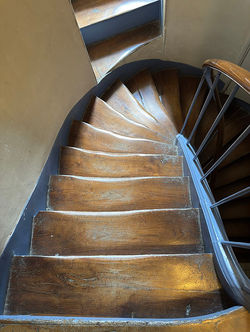
I mostly point my lens toward buildings and other architectural structures in part because I like interrupted lines and broken curves. I stare at perspectives as a hobby and play hide and seek with vanishing points as I respect the intended general structure design done by architects and others. Sometimes horizons can tilt, but gravity somehow always keeps things together. The absence of alignment helps the brain connect a few dots.
My work inhabits the space between motion and stillness. Within the city’s constant flow, intuition surfaces and the subconscious takes control. Light, shadow, and reflection fragment reality into emotional residue rather than narrative. Figures appear without identity, suspended between presence and disappearance. Each image is a quiet rupture where silence persists.
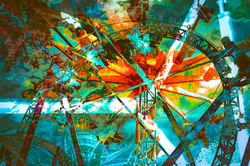
The three images included in this exhibition have been culled from my series ‘Carnival Memories’, which combines the aesthetic appeals of abstraction and intentional camera movement with the widely shared excitement and visual pleasures that exist at carnivals and amusement parks throughout the world. As can be seen in the offerings of this collection, my overall approach to photography and related forms of artistic production results from the combined influences of Cubism, Expressionism, Fauvism, Impressionism, and Surrealism, all of which affect how I see the world around me and then proceed to document it. This process involves important decisions regarding matters of abstraction, distortion, fragmentation, and emotional affect as well as whether to capture a subject realistically or instead quite innovatively.
Denise Heinrich-Lane
This work reflects a way of looking at and interpreting the world that finds meaning in the seemingly insignificant, in constellations that surround us but which we often bypass. I attempt to synthesize disparate configurations and am often amazed by what is there to be seen, read and interpreted.
Bruce M. Herman
The three photographs exhibited are from my project, ‘Seen from Reclaimed Land.’ The photographs were made while standing on a landfill that previously had been covered and reseeded or “reclaimed.” They examine how this reclaimed landfill is merging visually into the relatively wild lands that surround it near the community of Eagle River, Alaska. Sufficient time has passed since the landfill was covered that invasive plant species have begun to replace some of the native plants initially used in the reclamation work.
‘We were happy yet we didn’t know it’: When I open my eyes, I photograph them; when I close my eyes, I listen to them. For more than 30 years, I have been photographing my family, returning to the same people as time moves forward. These photographs are not just memories, but a way of holding on to time and building a shared memory. The series is accompanied by an audio piece created with 30 voices, a weave of sounds that, for me, represent home. Photography is my way of not forgetting.
When I am able to capture fog at just the right moment, its like capturing lightning in a bottle. Photographing fog can be as fleeting as photographing a sports event or wildlife. Fog is ephemeral. I have sometimes looked down for a moment, and when I looked up again, it was gone.
When the phallus thicket becomes too dense and the machismo gets out of hand, it’s time for another phallus cut. Use our model for this. The best phallus cutter currently available. This makes phallus cutting fun and easy. The device is also low-noise and can therefore be used in built-up areas. The series consists of 4 photos and is part of the larger photographic project Queer Tools. The object is a kinetic sculpture by artist George Rickey.
‘Measure for Measure’: The overall series is comprised of 25 staged images. All are single shot and lens based. They explore an authoritarian worldview dominated by power and control in which human relational interactions are often transactional. The series takes its’ title from Shakespeare’s ‘Measure for Measure’ in which themes of sin, hypocrisy, ethics, morality and “quid pro quo” are examined. I drew from my collection of dolls and toys and enlisted a variety of reflective and textured surfaces to stage my images. All were shot in natural light. I reverse the image as well as manipulate the tonal values. When the world grows dark, distressing and uncertain, artists are compelled to get to work and make sense of their place in it. ‘Measure for Measure’ is my attempt to explore and reconcile both the conscious and unconscious fears of what might lie ahead.
At the core of my practice lies an exploration of the ‘chronotope’ – the unity of space, time, and personal experience. I focus on the contemplative image as a universal language that connects individual history with collective memory through metaphors of light and fading. My art invites viewers to slow down and discover the hidden magic in everyday life, revealing a world that is fragile and alive, like light within time. It is not just a reflection of reality, but a visual journey into the very process of seeing.
‘In Darkness, These Eyes Can See’ explores the moment when safety breaks without warning – when the home, once a sanctuary, turns to danger. The shift is abrupt: light that once comforted now cuts deep; silence begins to echo. These images sit at that moment between before and after, when the familiar remains intact yet is void of meaning. The home still stands, but the promise has vanished, leaving only a ghost of sanctuary carried by memory. In the darkness that follows, vision adapts. The eyes learn to see differently, finding clarity not in light but in loss.

